Last updated November 21, 2026
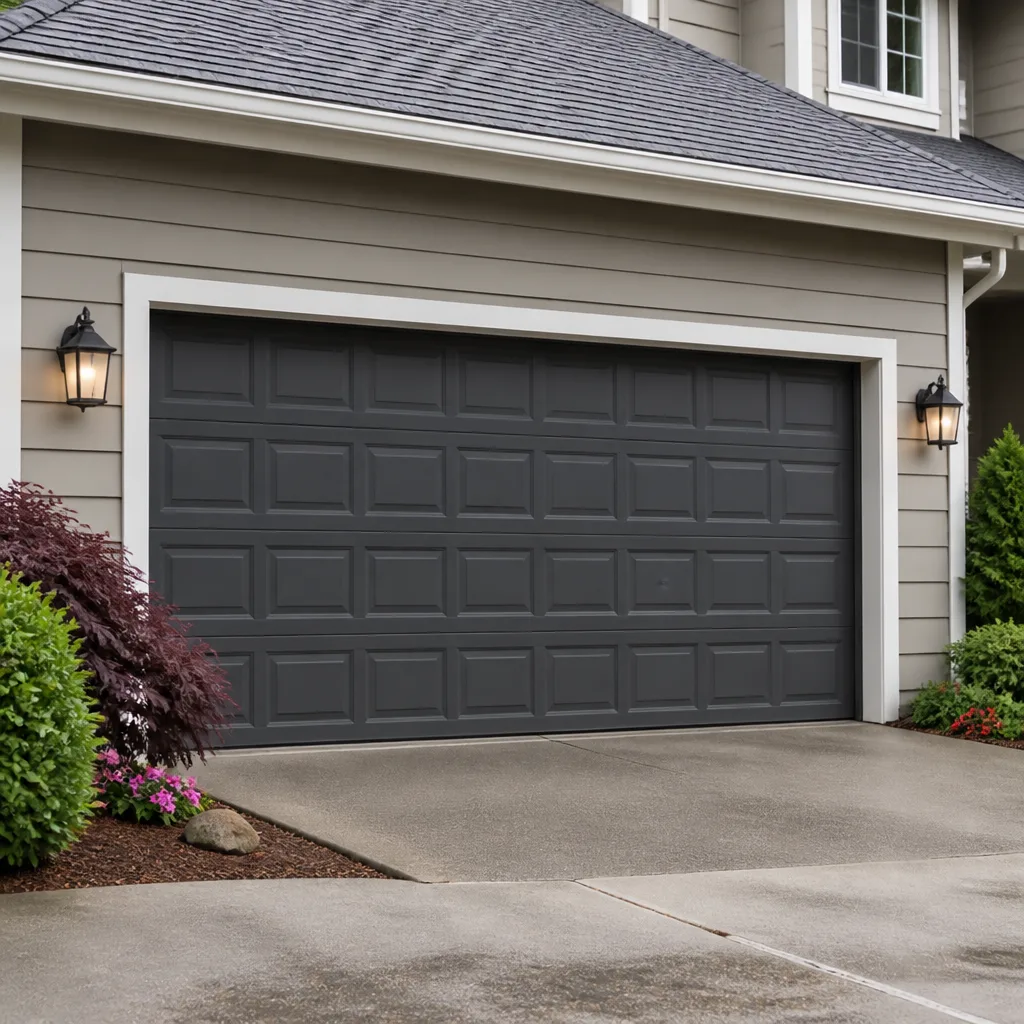 Raised-panel steel
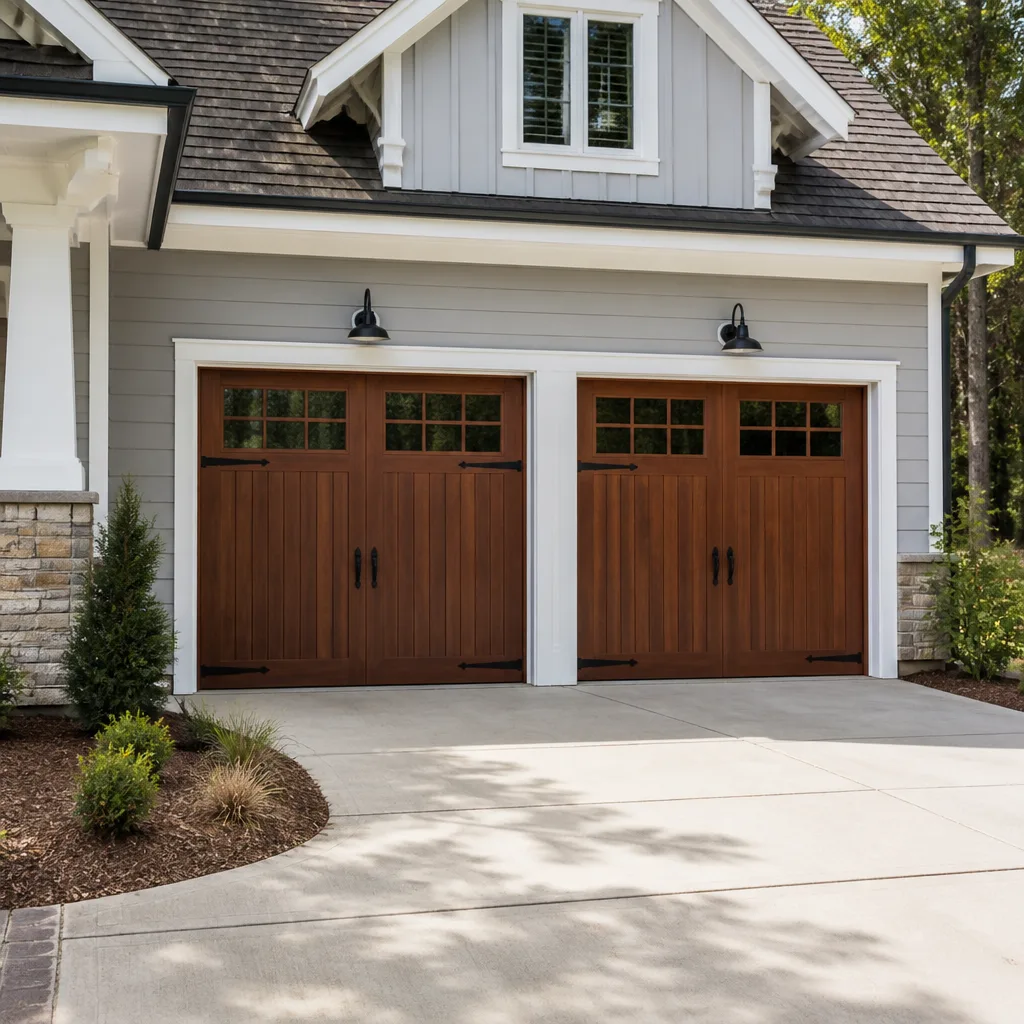 Carriage house
 Modern flush
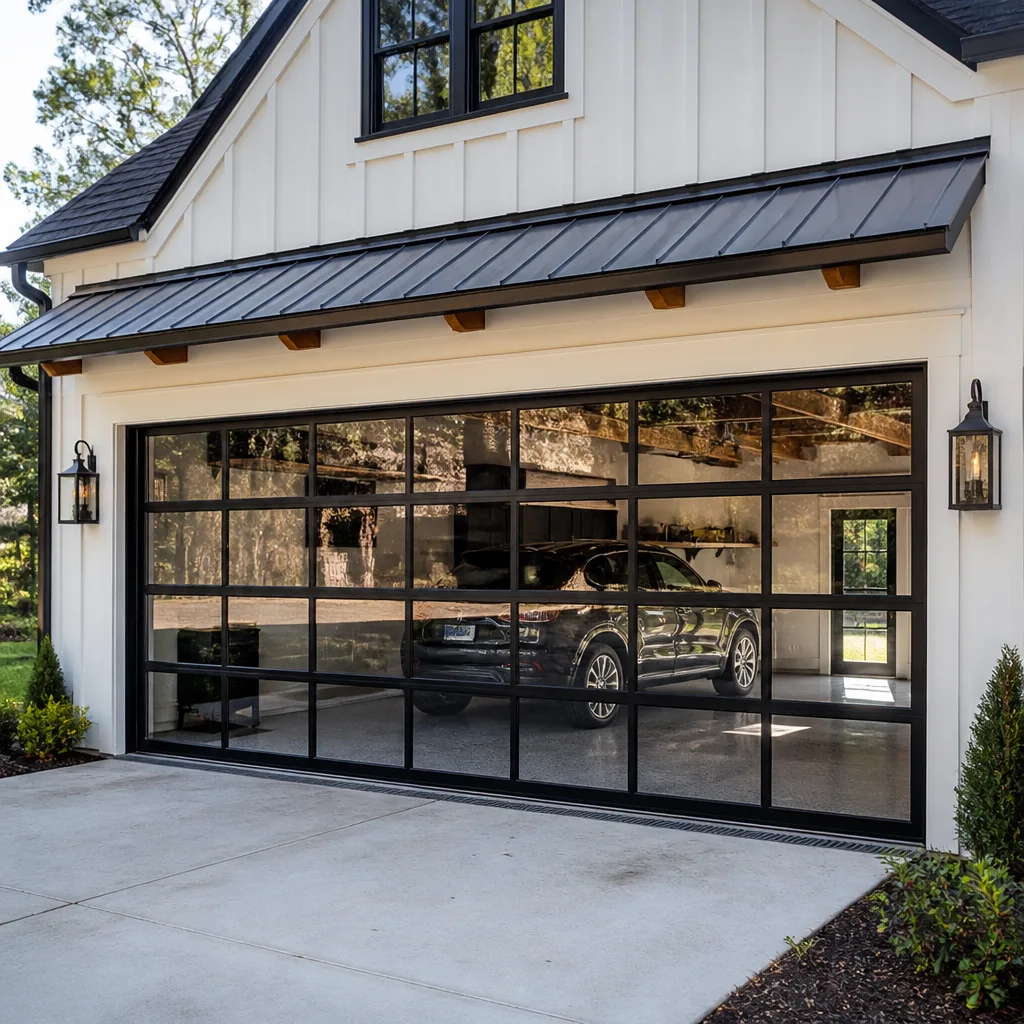 Full-view glass
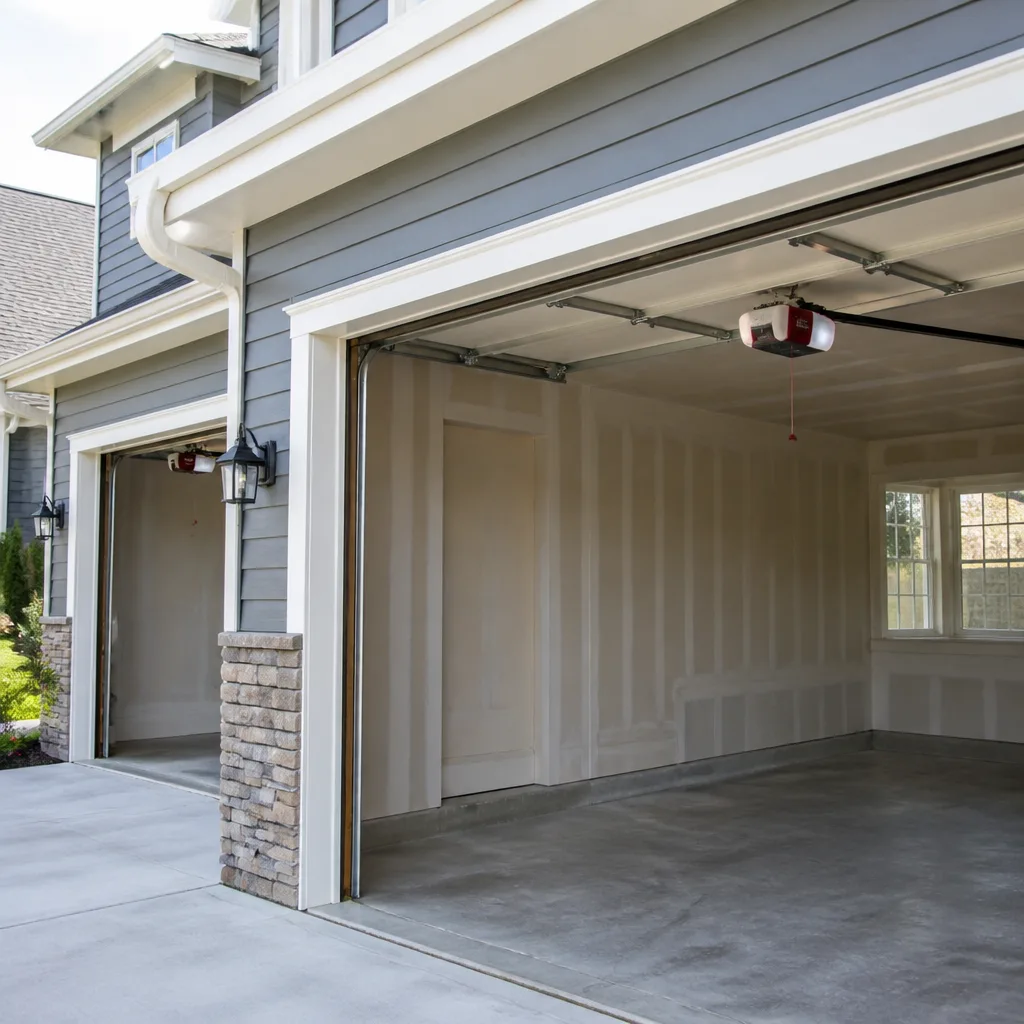 LiftMaster openers
 Chamberlain openers
Full 25-point door and opener safety check with every visit - springs, cables, rollers, tracks, and your LiftMaster or Chamberlain opener included
You get a price before we start. It does not change when the pro arrives.
Get your free estimateThe Complete Guide to Garage Doors in Spring
Most garage door guides hand you a checklist: rollers, hinges, panels, opener, springs. Treat every item as equal and you’ll misread the whole system. In our experience, the spring assembly is the mechanical core, and everything else is downstream of it. Springs carry the door’s weight, counterbalance it through every inch of travel, and set the load the opener actually has to fight. Get the springs right and a LiftMaster or Chamberlain opener can run for years without strain. Get them wrong, and you’re replacing motors, cables, and rollers on a schedule you never chose. This guide walks Spring homeowners through spring type, cycle rating, wire measurements, and brand-specific quirks, so you can read your own door and know when a problem is small and when it needs a technician.
Quick Answer
A garage door’s springs counterbalance the door’s weight so the opener only has to guide it, not lift it. If springs are undersized, mismatched, or worn, the opener absorbs the difference and burns out early. In Spring, the key things to know are your spring type (torsion or extension), its cycle rating, its measured wire diameter, inside diameter, and length, and whether your opener brand (LiftMaster, Chamberlain, Genie, Craftsman, or another) is compensating for a tension problem it wasn’t designed to handle. When in doubt, a trained technician can measure the springs in a few minutes and tell you exactly where your door stands.
Styles & brands we work with
- Raised-panel steel
- Carriage house
- Modern flush
- Full-view glass
- LiftMaster openers
- Chamberlain openers
Table of Contents
- How the Spring System Actually Works
- Torsion vs. Extension Springs in Spring Homes
- How to Read a Spring: Wire, Diameter, and Length
- What IPPT Means and Why Mismatches Burn Openers
- Spring Wire Performance in Spring’s Humidity
- How LiftMaster, Chamberlain, and Genie React to Tension Imbalance
- Cycle Ratings: The Number Most Homeowners Never Check
- Parts, Labor, and What to Ask Before You Approve Work
How the Spring System Actually Works
A torsion spring is a coiled steel cylinder mounted on a shaft above the door. When the door closes, the spring winds and stores energy. When the door opens, the spring releases that energy to lift the door, and the opener only provides a small assisting force. That balance point is the whole game: the springs handle most of the work, and the opener handles the rest.
Extension springs sit above the horizontal tracks on either side of the door and stretch as the door closes. They’re more common in older homes and lighter doors, but they operate on the same principle: store energy on the way down, release it on the way up.
Either way, four things determine whether the system performs:
- Spring rate – how much force the spring produces per inch of stretch or per turn of wind.
- Cycle rating – how many open-close cycles the spring is designed to survive before failure.
- Load match – whether the spring set matches the actual weight of your door, not a spec sheet.
- Corrosion resistance – how quickly the spring wire loses strength as it corrodes in your environment.
Every other component (cables, drums, rollers, hinges, panels) is designed around the assumption that the springs are matched and healthy. Change that assumption and the whole system drifts out of balance. This is why a snap in a Spring garage in the middle of a hot July feels like a total failure: it is. The springs aren’t a wear item on the periphery. They’re the load-bearing heart of the assembly.
Torsion vs. Extension Springs in Spring Homes
The typical Spring subdivision home has an attached two-car garage with a low-headroom track setup, meaning the ceiling in the garage sits close to the top of the door travel. That configuration has a direct effect on which spring type makes sense, and on how the system behaves when something fails.
When torsion makes more sense
Torsion springs mount above the door on a shaft and take up very little headroom. In a low-clearance garage, they often fit where extension springs would crowd the track. They also have a longer cycle rating on average, and a broken torsion spring usually leaves the door stuck closed rather than forcing it open under sudden release.
When extension springs still show up
Older Spring homes and some builder-grade installs still use extension springs. They work fine on lighter doors, but they need a safety containment cable running through the spring so that when the spring snaps, no steel travels across the garage. If your extension springs don’t have that cable, that’s worth checking before anything else.
What a low-headroom track means for the door
Low-headroom tracks bring the door closer to the ceiling, change the pivot angles, and put different load on the springs than a standard track. That’s not a problem in itself, but it does mean spring sizing has to be done for the actual geometry, not a generic fitment. A technician measuring for replacement springs should look at the track radius, the door’s total travel, and the drum diameter before ordering anything.
How to Read a Spring: Wire, Diameter, and Length
A torsion spring has three measurements that identify it: wire diameter, inside diameter, and length. If any one of those is wrong for the door, the spring won’t balance the load, and the symptoms show up somewhere other than the spring itself. A homeowner who can read a spring has a big advantage when talking to a technician.
- Measure the wire diameter with calipers, not a tape. Spring wire ranges roughly from 0.207 inches to 0.250 inches on residential doors. A difference of one hundredth of an inch changes the spring’s rate significantly. Most parts suppliers will not accept a return on a spring ordered with the wrong wire gauge.
- Measure the inside diameter. Most residential torsion springs are 1-3/4 inch or 2 inch inside diameter, with 2-5/8 inch used on heavier doors. Measure the inside of the coil, not the outside.
- Measure the length of the wound spring. A paired setup (left and right), not a single spring, is what you’re looking for on most standard two-car doors.
- Count the coils and check the wind direction. Torsion springs are wound in two directions. A red wind and a black wind differ. Ordering the wrong direction means the spring won’t hold tension.
Every one of those measurements needs to match your door’s actual weight. Door weight can be estimated from panel type and size, but the honest answer is that weight can only be confirmed by a scale or by the spring being tuned in place. That’s the step where brand fluency and a knowledgeable technician make a real difference. This is why we treat spring work as the core of our specialty. The load math is not a place to guess.
What IPPT Means and Why Mismatches Burn Openers
IPPT stands for inch-pounds per turn. It’s the measurement of how much rotational force a torsion spring produces for each full turn you wind it. When a technician installs or replaces a torsion spring, they wind it to a specific number of turns, and the IPPT of the spring multiplies with that turn count to set the total balance force on the door.
Here’s the practical effect: if the IPPT of the replacement spring is higher or lower than what the door was built for, the technician has to compensate with a different number of winds. Sometimes the compensation works cleanly. Sometimes it doesn’t, and you end up with a door that’s too heavy at the top or too light at the bottom. Either way, the opener absorbs the difference.
That’s the single most common cause of premature opener motor burnout we see on Spring garage doors. The symptom is a motor that runs hot, strains, reverses on the way down, or fails within a couple of years of a spring replacement. The root cause is a mismatch between the replacement spring’s IPPT and the door’s actual lifting requirements. A careful technician tunes the door in the open position on a scale check so that balance is right, and then sets the opener limits to match. That two-step is what most service calls skip.
- If the opener strains upward: springs are under-tensioned or undersized.
- If the opener strains downward or reverses: springs are over-tensioned, or the opener limits need recalibration.
- If the opener runs smoothly but the door hangs: the spring IPPT is likely mismatched and compensating in the wrong direction.
If your opener is showing any of those symptoms, a diagnostic visit that includes both garage door opener repair and spring assessment will usually find the real problem faster than replacing the opener alone.
Spring Wire Performance in Spring’s Humidity
Springs are steel, and steel in a humid garage environment will corrode. The question is how fast, and how much of that corrosion shortens the spring’s useful life. In Spring, with long humid stretches through the warmer months, oil-tempered spring wire and galvanized spring wire behave noticeably differently.
Oil-tempered wire is the standard choice for most residential springs. It’s coated with a thin film of oil that resists rust initially, but in a humid garage the coating wears off where the spring coils rub against each other during winding. Once bare steel is exposed, corrosion begins at those contact points and works into the coil. The spring doesn’t snap one day because of a single stress event; it snaps because corrosion has reduced the wire’s effective strength over thousands of cycles.
Galvanized wire has a zinc coating that resists humidity longer, but the coating adds cost, and once it’s compromised at the coil contact points the galvanizing can’t repair itself. Galvanized is often a better fit for garages that see heavy humidity and limited airflow.
What matters for homeowners in Spring is this: a spring rated for a certain cycle count under ideal conditions will not last that long in a humid garage unless it’s kept clean and dry. An annual wipe-down of the spring surface with a light oil (not grease, which traps dust) is a reasonable maintenance step. But the bigger point is that any spring replacement should account for the local climate. A generalist handyman won’t. A garage door specialist who works in Spring every day will, and will recommend the wire type and coating that fits your garage’s humidity exposure rather than whatever’s cheapest on the shelf.
How LiftMaster, Chamberlain, and Genie React to Tension Imbalance
Every modern garage door opener has a force-sensing safety system that reverses the door if it meets unexpected resistance. The way those systems are tuned varies by brand, and that tuning affects how a spring tension problem shows up. Understanding the brand-level differences helps you interpret what your opener is telling you.
LiftMaster
LiftMaster openers generally run a tighter force-sensing calibration than most. In our experience, a LiftMaster will reverse on the way down the moment spring tension drifts, often before the door visibly struggles. That’s a safety feature doing its job, but it also means LiftMaster users tend to notice tension problems early, sometimes before the spring has visibly failed. If you see a LiftMaster reversing repeatedly, the springs are the first place to look, not the safety sensors.
Chamberlain
Chamberlain openers (same parent family as LiftMaster but different tuning) tend to be a bit more forgiving of small force drifts, which means a Chamberlain can run with slightly out-of-balance springs for a longer stretch before the safety system kicks in. That sounds good at first, but it means the motor is absorbing the imbalance quietly for longer. Chamberlain owners often discover tension problems when the motor gets hot or starts making a new noise, not when the door reverses.
Genie
Genie openers, particularly the chain-drive residential units, tend to have a moderately firm force limit that’s closer to the middle of the range. They respond to tension imbalance with visible hesitation and audible strain, usually within a few dozen cycles. That’s a decent early-warning behavior, but it means a Genie paired with worn springs will feel its age quickly.
The pattern across all three brands is the same in structure: the opener was designed to guide a balanced door, and any change in spring load eats into the margin it was built with. The difference is only in how loud the complaint gets and how soon. If you’re not sure which brand you have, it’s usually stamped on the opener motor housing or written on the safety label near the door tracks.
Cycle Ratings: The Number Most Homeowners Never Check
A cycle is one full open-and-close of the garage door. Every spring is rated for a number of cycles, usually somewhere between 10,000 and 30,000 for standard residential replacement springs. That rating is a design life, not a warranty. It tells you roughly how many times the spring is expected to operate before it fails, under ideal conditions.
Here’s the math most homeowners have never done. A 10,000-cycle spring on a double-car door in a typical Spring home, opened four times a day (arrive, leave, arrive, leave), is theoretically good for about 6.8 years. But that’s under standard conditions. Add humid summers, a slightly heavy door panel, or an opener that’s compensating for a spring that was slightly off from the start, and the real number drops.
Practical applications for Spring homeowners:
- Ask about cycle rating when a spring is replaced. Standard is 10,000. A high-cycle spring (20,000 or 30,000) costs more upfront but lasts proportionally longer. It’s the difference between replacing the spring twice over a decade versus once.
- Matched pairs should be replaced together. If one torsion spring snaps, the other is already at the same cycle count. Replacing only one throws the system out of balance, and you’ll be back in a year.
- Cycle ratings are theoretical. They assume clean, dry, correctly tensioned operation. In a humid Spring garage, that assumption is generous.
Homeowners who proactively upgrade to a higher-cycle spring on a garage door repair visit usually find that the incremental cost per year of service is lower than the emergency-repair path.
Parts, Labor, and What to Ask Before You Approve Work
A spring replacement is a parts job and a labor job, and both matter. Parts are about getting the right spring (correct wire, diameter, length, IPPT, IPPT direction). Labor is about winding, tuning, safety checks, and confirming the balance before the technician leaves. Skipping either is how doors end up back in the same failure state a few months later.
The questions worth asking before you approve a spring replacement:
- What are the measurements of the replacement spring? A technician should be able to read them to you (wire, inside diameter, length, wind direction).
- What’s the IPPT of the spring you’re installing, and how many turns will you wind it? This is the number that determines whether the opener will breathe easy or fight the door.
- Is it a matched pair, and is the cycle rating standard or high-cycle? Replacement should be paired on a two-spring door, and the cycle rating should be discussed, not assumed.
- Will the opener limits be recalibrated after the spring goes in? Not all technicians do this. It should be standard.
- Will the balance be verified? A properly balanced door should hold position roughly halfway open with the opener disengaged. That’s a one-minute check that separates good work from a fast swap.
When a garage door installation is the next step (a full new door and opener rather than a repair), those questions carry over. Make sure the installer will match the spring set to the new door’s actual weight, not just the manufacturer’s spec sheet, and that the opener brand you’re using (Craftsman, LiftMaster, Chamberlain, Genie, or another) is calibrated against the installed springs, not the springs in a carton.
Common Mistakes to Avoid
- Assuming a broken spring and a broken opener need two separate service calls. In most failures we see, a snapped spring triggers opener fatigue. Diagnosing them together saves time and usually money.
- Replacing one torsion spring when both are worn. On a paired system, the second spring is at the same cycle count. Replacing only one throws the balance off and shortens the life of both.
- Ordering a spring by length alone. Wire diameter and inside diameter are just as important as length. A “close enough” spring will not perform like the correct one.
- Ignoring the opener’s behavior after a spring replacement. If the opener is straining, reversing, or running hot within a few weeks of a spring swap, the balance wasn’t set correctly. Call the technician back.
- Letting a humid Spring garage sit without any spring maintenance. An annual wipe-down with light oil and a quick visual check for rust isn’t glamorous, but it noticeably extends spring life in humid climates.
- Assuming the cheapest spring on a parts site is the right one. A spring rated for 10,000 cycles at a bargain price is often a spring with less corrosion resistance and shorter real-world life than the one your original door came with.
- Skipping the safety containment cables on extension springs. If your extension springs don’t have containment cables running through them, that’s a safety gap that should be addressed before anything else on the door.
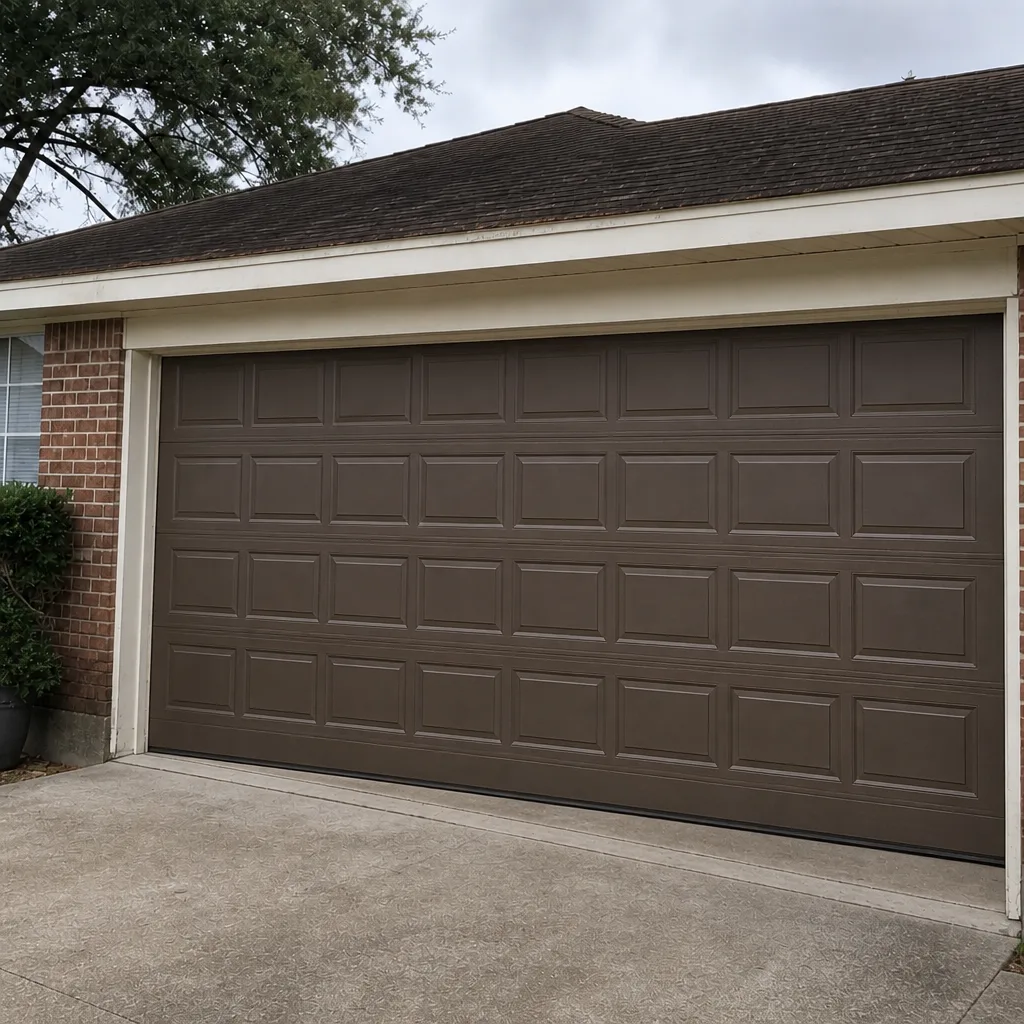
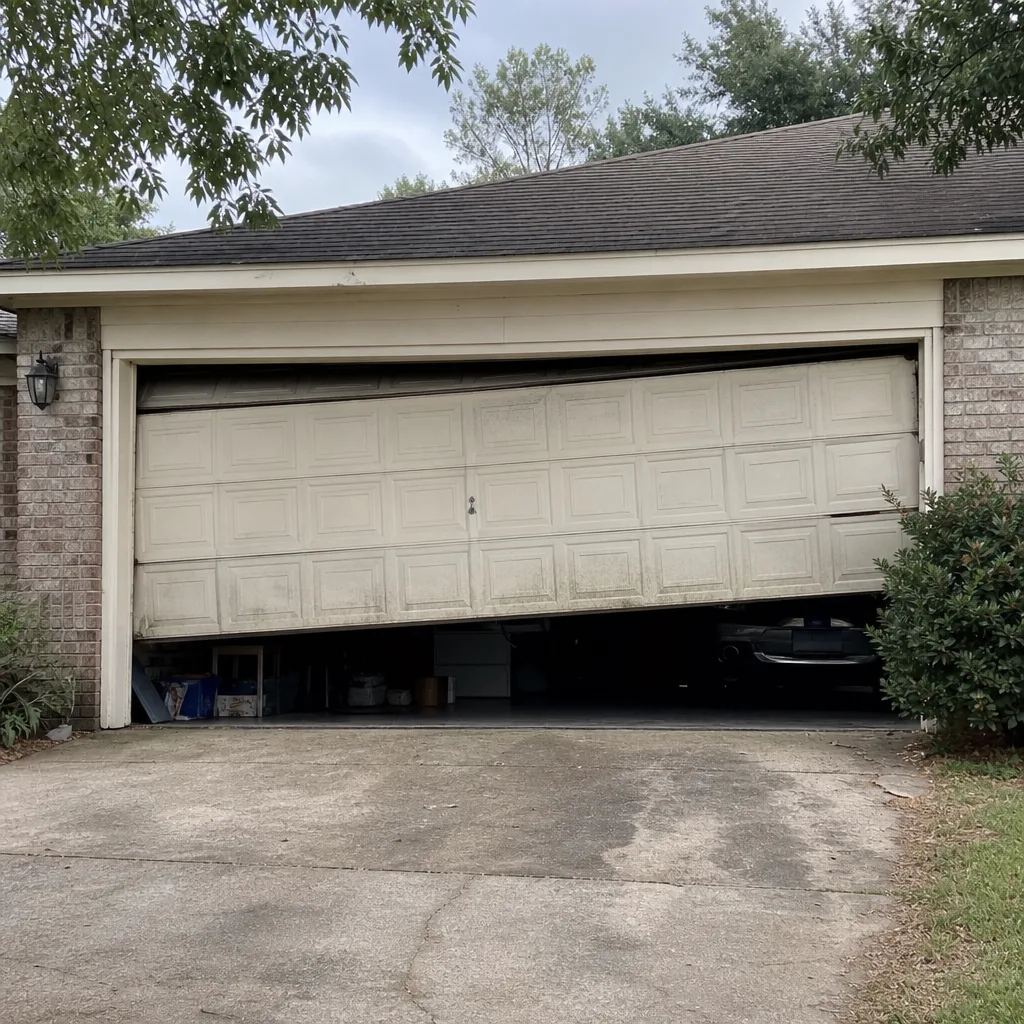
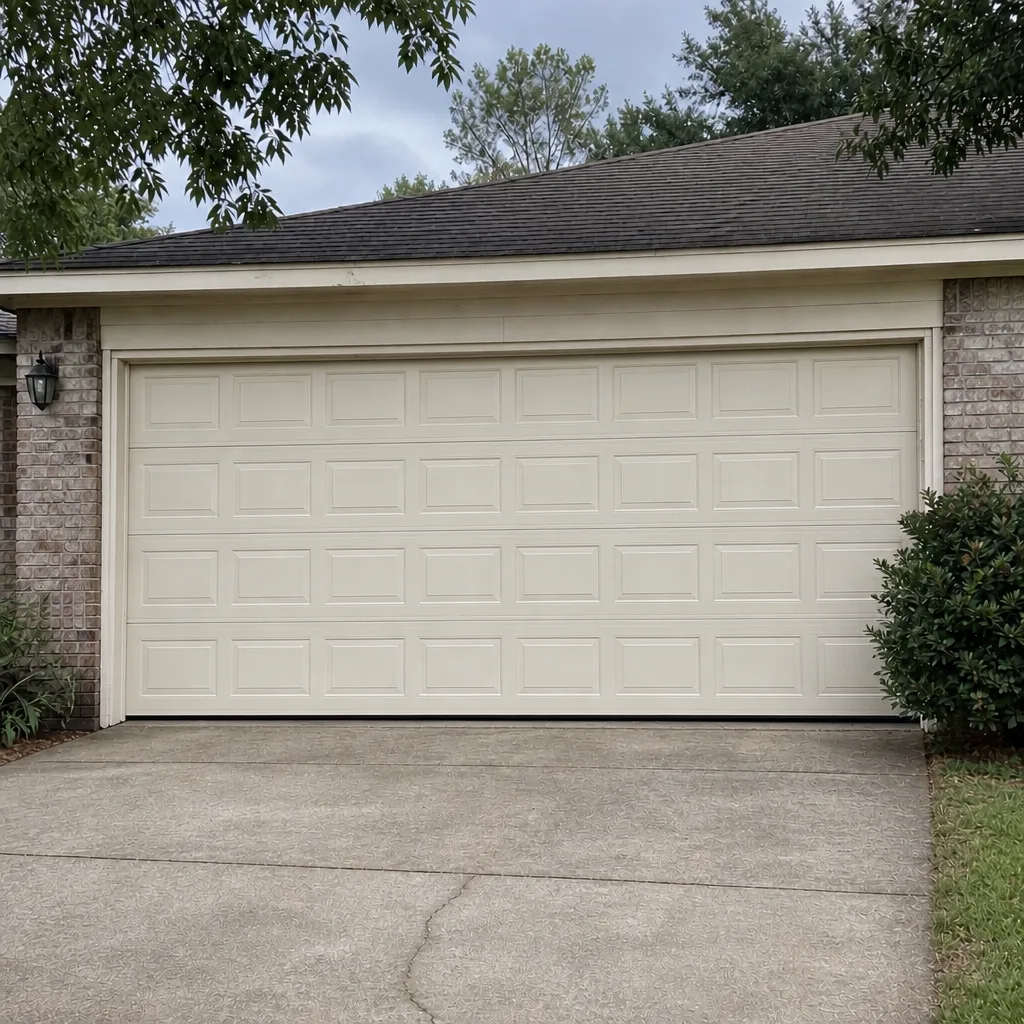
See the difference
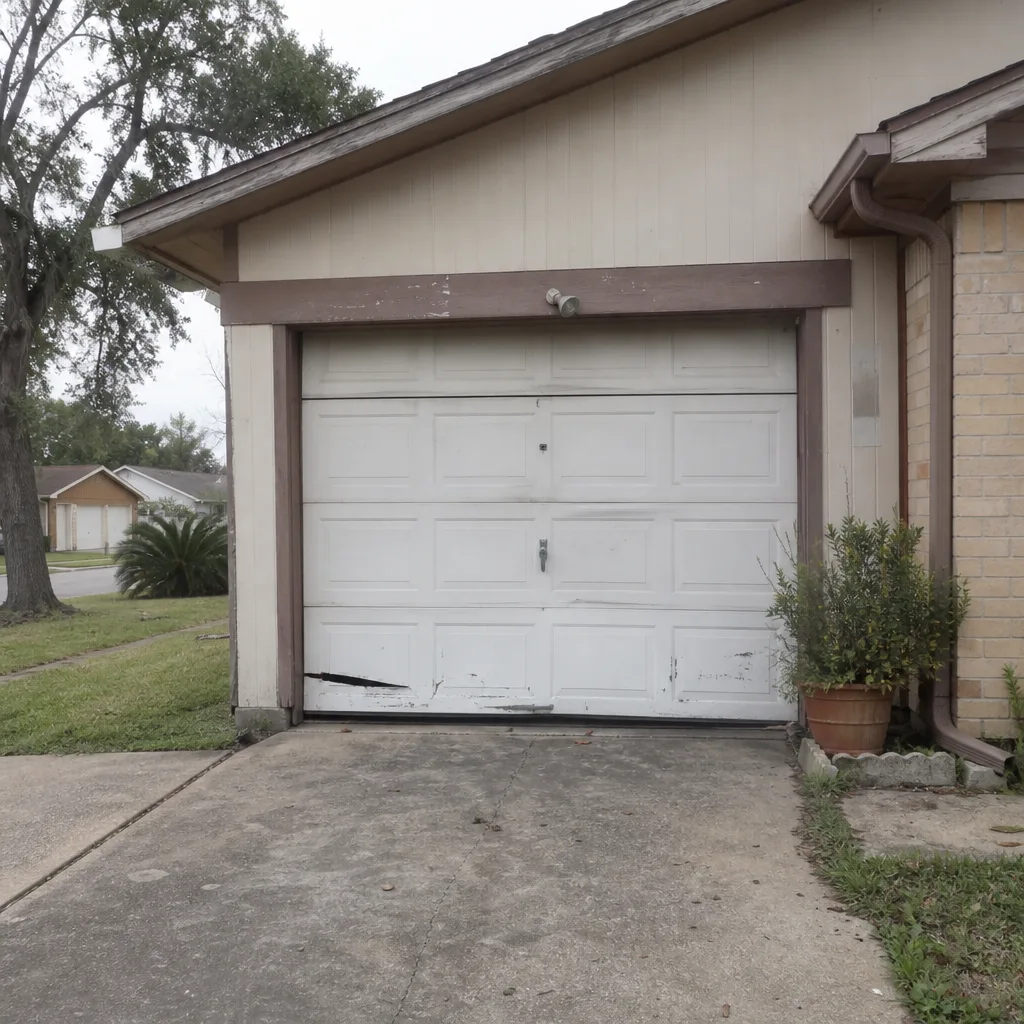 Before
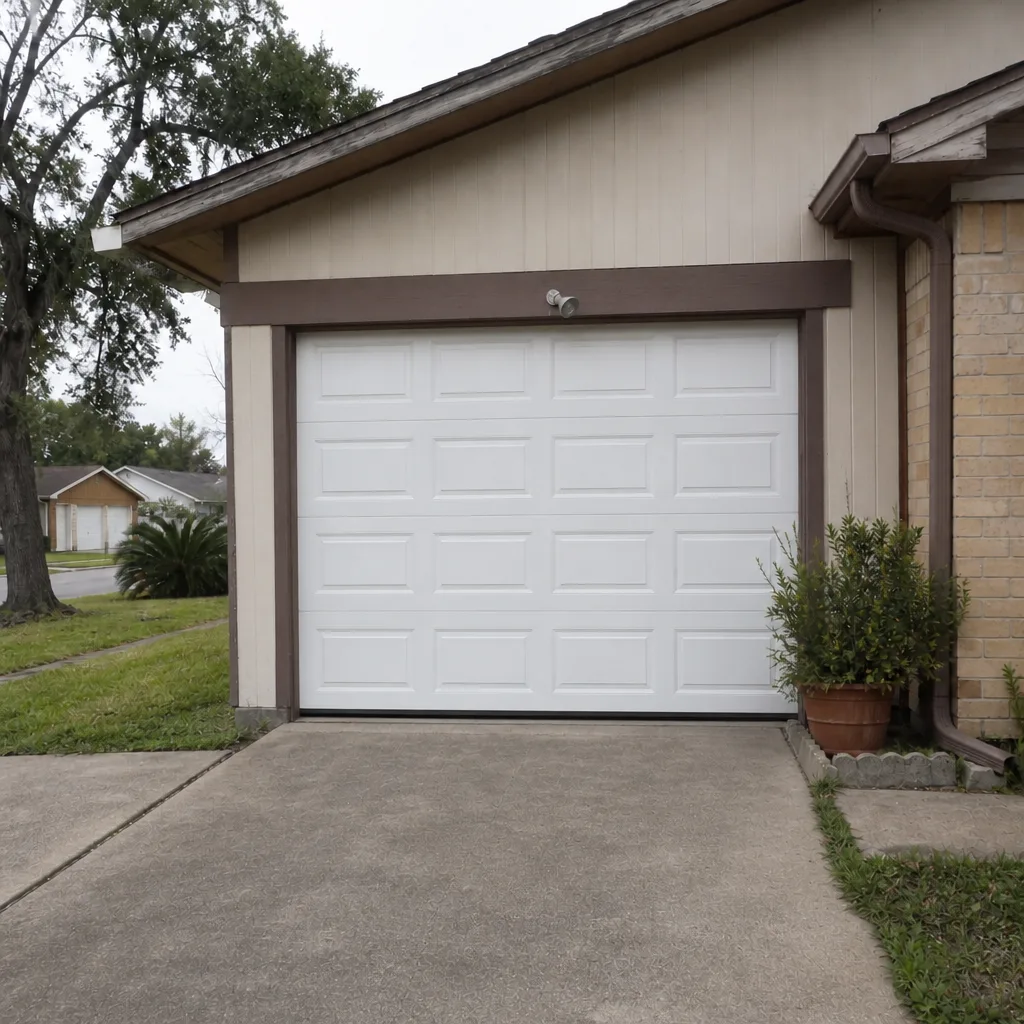 After
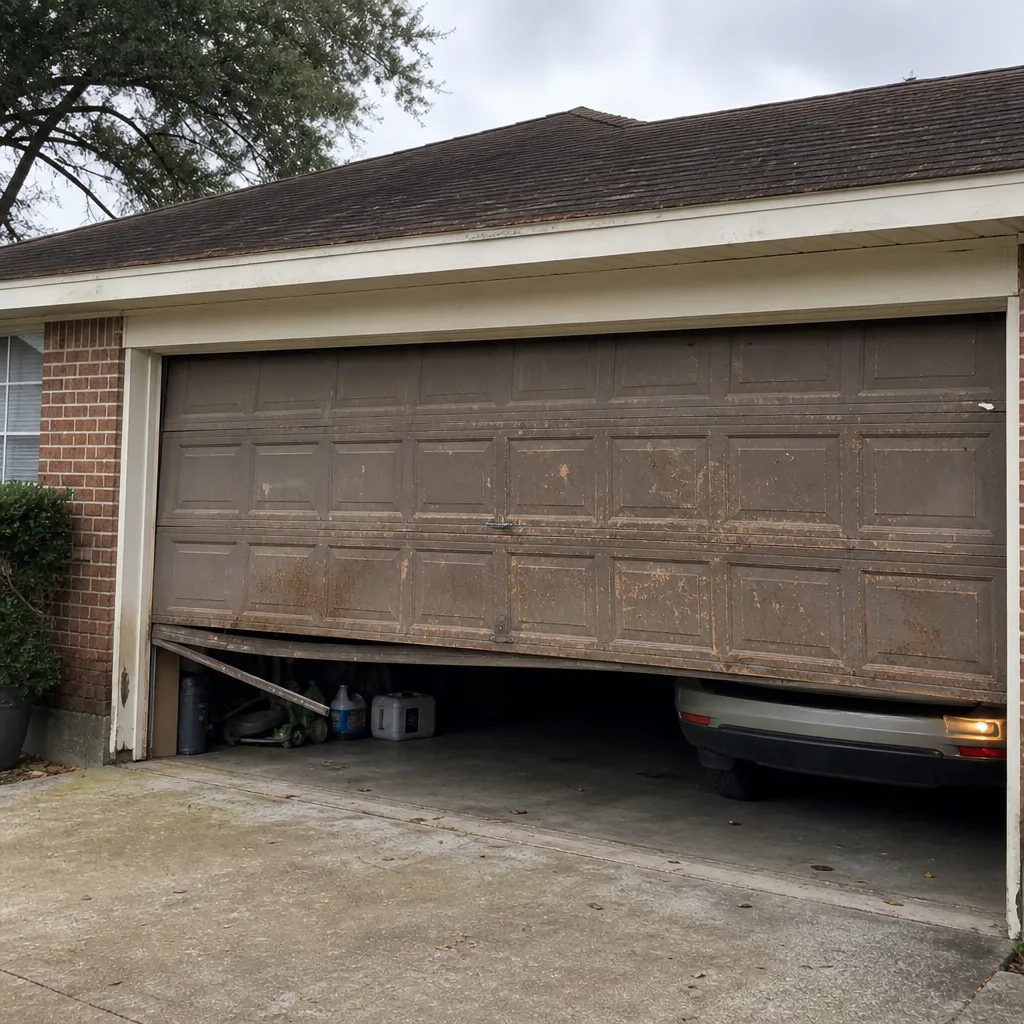 Before
 After
 Before
 After
When to Call a Professional
Springs are stored energy under tension, and a mistake during winding or removal can cause serious injury. That’s not a warning to skip; it’s the primary reason to call a technician. The good news is that most spring jobs are quick once the right parts are on hand. Call a professional when you notice any of the following: a loud snap followed by a door that hangs or won’t open, visible gaps in a torsion spring coil, an opener that reverses without obstruction, a door that rises unevenly or feels much heavier than it used to, or extension springs without containment cables. Spring Garage Door Repair Pros offers free estimates in Spring and can be reached at (855) 337-1360. Our technicians have up to 10 years of experience and specialize in spring work across LiftMaster, Chamberlain, Genie, Clopay, Amarr, Wayne Dalton, Craftsman, and Raynor systems.
Frequently Asked Questions
If the door feels significantly heavier or won’t stay up when disconnected from the opener, it’s almost certainly a spring problem. If the door moves freely by hand but the opener still won’t lift it or reverses, the opener is the issue. In many cases, a spring failure causes the opener problem second. Call (855) 337-1360 for a diagnostic visit; estimates are free.
A 10,000-cycle spring is rated for roughly 10,000 open-close cycles; a 20,000-cycle spring is rated for twice that. Higher-cycle springs cost more upfront but usually cost less per year of service. In a humid Spring garage, the effective life of any spring is shorter than its rating, so the higher-cycle option tends to be worth the difference.
No, we don’t recommend it. Torsion springs hold stored energy measured in hundreds of pounds of force, and winding or removing them without the right tools and training can cause serious injury. Our technicians have up to 10 years of experience on spring work specifically; that experience matters. Call (855) 337-1360 for a free estimate.
The most common reason is an IPPT mismatch between the replacement spring and the door’s actual weight, or a missed opener limit recalibration after installation. If the opener is straining or reversing within a few weeks of a spring replacement, call the technician back. A properly balanced door should take tension off the opener, not add to it.
The brand is usually stamped on the opener motor housing, printed on the safety label near the door tracks, or visible in the opener’s manual. The most common brands in Spring homes are LiftMaster, Chamberlain, Genie, and Craftsman. Once you know the brand, a technician can tell you what tension behavior to expect and how to read any warnings it’s giving you. Call (855) 337-1360 if you’d like us to identify it during a visit.
Yes. Humidity accelerates corrosion on spring wire, and corrosion reduces the wire’s effective strength over time. An oil-tempered spring that would last its full cycle rating in a dry climate may fail earlier in a humid garage. Galvanized springs resist humidity longer, and periodic light oil maintenance helps. A technician familiar with the local climate can recommend the right spring type for your specific garage.
The Bottom Line
A garage door is a spring system with some panels and an opener attached. Get the spring type, cycle rating, wire measurements, and IPPT right, and the rest of the assembly follows. Get them wrong, and you’ll be replacing openers and tracking down mysterious failures for years. In Spring, the humidity factor makes spring selection and maintenance more important, not less. The next time something feels off with your door, start with the springs. With up to 10 years of technician experience and coverage across LiftMaster, Chamberlain, Genie, Clopay, Amarr, Wayne Dalton, Craftsman, and Raynor, we can help you read your own system and make the right call.
If you’re in Spring and your door isn’t behaving the way it should, call Spring Garage Door Repair Pros at (855) 337-1360 for a free estimate. We know the brands. We fix the system. We start with the springs.
Written by the team at Spring Garage Door Repair Pros.